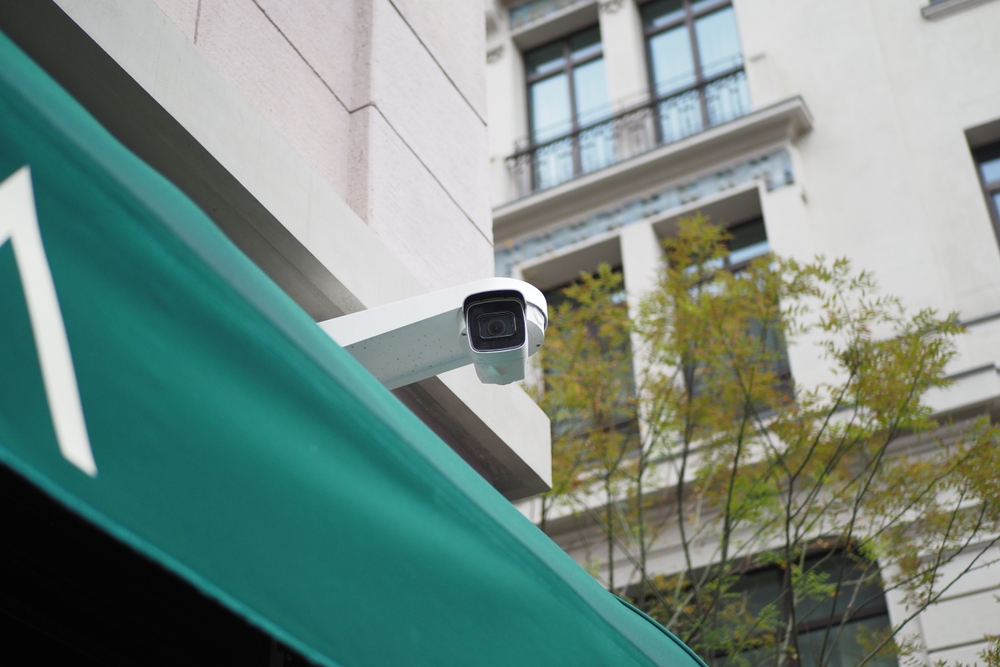
If you’re organising an event that involves the sale or supply of alcohol, there’s a good chance CCTV will form part of your licensing requirements, whether you’re aware of it yet or not.
It’s one of the most common queries we see from event organisers and venue managers right now: “our licensing authority is asking for CCTV, where do we start?” This post explains why it comes up, what the requirements typically look like, and how a temporary or permanent CCTV installation can help you get your application over the line.

Why Alcohol Licensing and CCTV Go Hand in Hand
Under the Licensing Act 2003, licensing authorities in England and Wales must promote four key objectives when granting licences. One of those is the prevention of crime and disorder, and CCTV is one of the most straightforward ways to demonstrate that your event will meet it.
The police, as a responsible authority under the Act, have the power to request CCTV as a condition of granting a premises licence or approving a Temporary Event Notice (TEN). In practice, this happens regularly for events that involve alcohol sales, particularly those running late into the evening or attracting larger crowds.
Licensing authorities can also add bespoke conditions to a licence; conditions tailored to the specific premises or event in question. A requirement to install and maintain CCTV covering entry and exit points, bar areas, and key public spaces is among the most common of these. Fail to meet the condition, and you risk your licence being reviewed or revoked.
Premises Licences vs Temporary Event Notices: Does It Matter?
Both types of licence can attract CCTV conditions, but the context tends to differ.
A premises licence is typically held by a venue that regularly hosts events with alcohol, a wedding venue, a festival site, a sports club. If your site already holds a premises licence, CCTV requirements may already be embedded in its conditions. If you’re applying for a new one, the police and licensing authority will assess your operating schedule and may request CCTV as part of approval.
A Temporary Event Notice is used for one-off events at unlicensed premises. Applications must be submitted at least 10 working days before the event, and the police have the right to object if your event carries a higher risk profile: late finish, large numbers, significant alcohol sales. The likelihood of CCTV being raised as a requirement increases accordingly.
In either case, demonstrating that you have given serious thought to crime prevention and public safety will always work in your favour with the licensing authority.

What Do Licensing Authorities Actually Expect From a CCTV System?
Requirements vary by local authority and by event, but there are common themes worth understanding before you invest in a system:
HD-quality footage. Licensing authorities increasingly specify that CCTV must capture images of sufficient clarity to be usable as evidence. Standard-definition cameras are unlikely to satisfy this.
Coverage of key areas. Entry and exit points, bar areas, and any area where incidents are likely to occur. Black spots and dead zones will be flagged.
Remote viewing. We can connect all cameras back to a centralised viewing screen on site.
Adequate retention. Footage is typically required to be retained for a minimum of 31 days so that it’s available to police if needed.
Accessible on request. Police and authorised officers must be able to access or download footage promptly when required. Cloud-based systems with a management dashboard make this straightforward.
GDPR compliance. You are legally required to register with the Information Commissioner’s Office (ICO) as a data controller if you operate CCTV, display appropriate signage, and have a written policy covering how footage is stored and disclosed
It’s also worth noting that CCTV cannot be used as a substitute for other safeguards, such as adequate staffing levels, Challenge 25 procedures, and incident log-keeping will all remain part of your licensing obligations. CCTV supports those measures; it doesn’t replace them.
Temporary Installations: A Practical Option for Events
Not every event takes place at a venue with an existing, permanent CCTV infrastructure. Outdoor festivals, marquee events, temporary licensed bars, and pop-up venues all present the same challenge: you need a compliant system in place for a defined period, often with limited lead time.
Temporary CCTV installations have become a well-established solution for exactly this scenario. A system can be scoped, installed, and operational ahead of your event, covering the areas specified by your licence conditions, and then removed once the event concludes. For recurring events, the same infrastructure can be deployed season after season.
The key is working with a provider who understands what licensing authorities are looking for, not just a company that can put cameras up. The system needs to meet the evidential standards expected, integrate with cloud storage and access for police, and be properly documented for GDPR purposes.
What About Permanent Venues?
If you manage a venue that regularly hosts licensed events, whether that’s a sports club with a bar, an events suite, or a hospitality space, a permanent, business-grade CCTV system is usually the more practical long-term investment.
A permanent installation gives you consistent coverage, removes the logistics of deploying and recovering temporary equipment around each event, and demonstrates to your licensing authority that security is built into how you operate rather than bolted on as an afterthought. That consistency tends to reflect well during licence reviews and renewals.
Modern business-grade systems offer features that go well beyond basic recording: 4K resolution, pan-tilt-zoom cameras, motion detection alerts, infrared night vision, and remote access via a mobile app or online dashboard. For venues running late-night events, that level of visibility and response capability can be genuinely valuable.
Getting the Right Advice
If you’re working through a licensing application and CCTV has been raised as a requirement, or you want to get ahead of it before it is, the starting point is understanding exactly what your licensing authority and the police will expect.
Bytes Digital works with event organisers, venue managers, and businesses across the UK on both temporary and permanent CCTV installations. Our in-house engineers carry out a full site survey, advise on camera placement and system specification, and ensure the system meets the standards required for licensing compliance.
You can find out more about our CCTV solutions here, or get in touch directly to talk through your requirements.