.png)
If you run a venue, manage a public-facing site, or organise events in Bristol and the South West, you need to be aware of Martyn’s Law.
Formally known as the Terrorism (Protection of Premises) Act 2025, this landmark piece of UK legislation places new legal responsibilities on venues and event organisers across the country. It received Royal Assent on 3 April 2025, and full enforcement is expected from Spring 2027.
That gives you a window to prepare. But it is a window, not an excuse to wait.
At Bytes Digital, we work with businesses across Bristol and the wider South West to design, install and support CCTV and security technology. In this guide, we break down what Martyn’s Law means in practice, where CCTV fits into your compliance obligations, and how to start preparing now.

What Is Martyn’s Law?
Martyn’s Law is named in memory of Martyn Hett, one of the 22 victims of the 2017 Manchester Arena attack. Following years of campaigning by his mother, Figen Murray, the Act now places a legal duty on those responsible for public premises and events to be prepared for a terrorist incident.
The legislation applies across the UK and covers a wide range of venues and settings, including:
• Hospitality venues: restaurants, bars, hotels
• Entertainment and leisure: theatres, cinemas, concert halls, sports venues
• Retail spaces
• Places of worship
• Education and healthcare settings
• Transport hubs
• Community halls and event spaces
If your premises or event can reasonably expect 200 or more people to be present at the same time, you are likely in scope.
The Two Tiers of Compliance
Martyn’s Law uses a tiered approach, with obligations scaled by capacity. Understanding which tier applies to you is the starting point for any compliance planning.
Standard Tier: 200 to 799 People
If your venue or event can hold between 200 and 799 people, you fall under the standard tier. Your obligations focus on having the right procedures in place, specifically:
• Evacuation plans: knowing how to get people out quickly and safely
• Invacuation procedures: moving people to a place of safety within the building
• Lockdown protocols: the ability to secure a venue rapidly if needed
• Communication plans: how staff inform and direct the public during an incident
You will also need to notify the Security Industry Authority (SIA), the body responsible for overseeing compliance.
Physical security measures such as CCTV are not mandated at this tier, but they are worth considering. A well-designed camera system can support both the procedural requirements and the day-to-day safety of your venue.
Enhanced Tier: 800 or More People
If your venue or event expects 800 or more people, the requirements are significantly more demanding. In addition to everything required at the standard tier, enhanced duty venues must:
• Carry out detailed risk assessments specific to terrorism threats
• Implement documented public protection measures
• Appoint a designated senior individual accountable for security compliance
• Submit all documentation to the SIA
• Take steps to reduce vulnerability through physical protective measures
This is where CCTV, access control, bag search policies, and perimeter security become directly relevant. For larger venues and events, the guidance explicitly names these as appropriate physical measures.
Where Does CCTV Fit In?
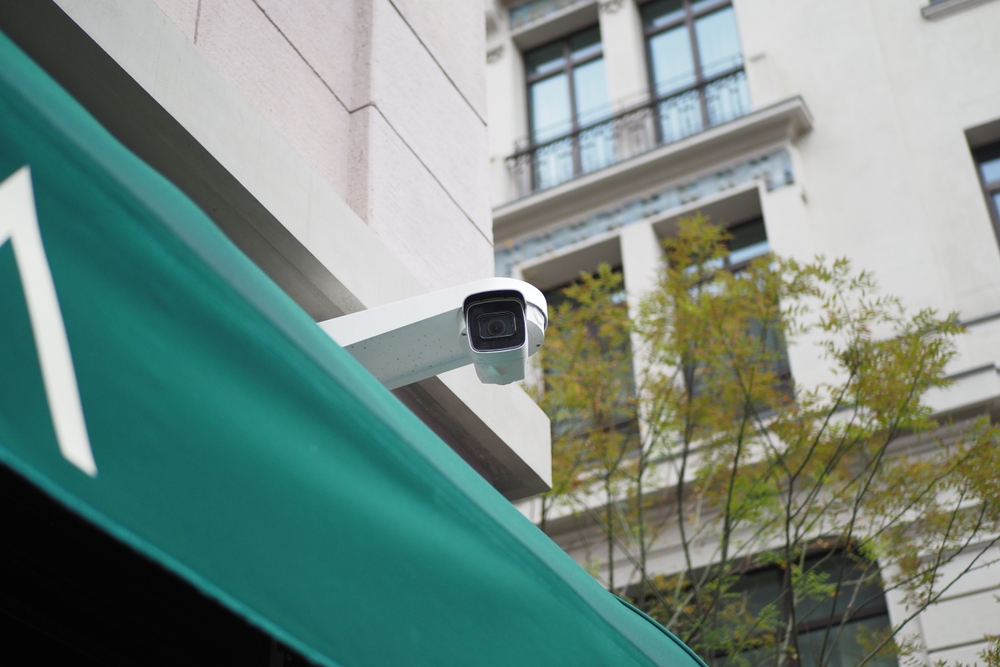
CCTV sits at the heart of any serious physical security strategy, and Martyn’s Law acknowledges this directly. For enhanced tier venues, a properly designed CCTV system can help you meet your obligations in several ways.
Situational Awareness
Good CCTV coverage gives you visibility across entrances, exits, public areas and perimeters. That means you can identify unusual behaviour, monitor crowd movement and respond quickly when something does not look right.
Supporting Your Response Procedures
During an incident, real-time camera feeds allow security staff and management to make faster, better-informed decisions. Whether you are co-ordinating an evacuation or confirming whether an area is clear, live footage matters.
Evidence and Documentation
Martyn’s Law requires enhanced tier venues to document their protective measures and share that documentation with the SIA. A recorded, auditable CCTV system forms part of that evidence trail and demonstrates that you have taken your obligations seriously.
Deterrence
Visible, well-positioned cameras act as a deterrent. This does not eliminate risk, but it is a recognised component of reducing vulnerability, which is precisely the language the Act uses.
What About Smaller Venues and One-Off Events?
Not every venue that falls under Martyn’s Law will need a permanent, fixed CCTV installation. Events held at temporary or outdoor locations, village fetes, community festivals, markets and similar gatherings present a different set of challenges.
Even if your event sits within the standard tier, it is worth thinking about how you would observe the site, monitor entrances, and identify potential threats in real time. For many events, this might mean a combination of trained staff, stewarding plans, and temporary or portable camera solutions.
If you are unsure whether your event or venue is in scope, the SIA and ProtectUK guidance can help you work through the thresholds. A conversation with a local security technology provider is also a straightforward way to understand your options.
The Timeline: When Does This Come Into Force?
Martyn’s Law received Royal Assent on 3 April 2025. The government has built in an implementation period of at least 24 months, which means enforcement is not expected until Spring 2027 at the earliest.
The Home Office published statutory guidance in April 2026. This gives venues and event organisers a clear framework for understanding what is required, and how the SIA will assess compliance.
Two years sounds generous. It is not, once you factor in the time needed to assess your site, identify gaps, plan any infrastructure changes, carry out installation work, train staff, and produce the documentation the law requires.
Venues that start now will be in a position of strength. Venues that leave it until late 2026 will be under pressure. Venues that wait until enforcement starts will be at risk of financial penalties, compliance notices and, in serious cases, restriction notices that affect your ability to operate.
How Bytes Digital Can Help
At Bytes Digital, we design and install CCTV and security systems for businesses and venues across Bristol and the South West. We understand the practical realities of running a site or organising events, and we work with you to find solutions that fit your space, your budget and your compliance needs.
We can help you:
• Assess your current CCTV provision and identify any coverage gaps
• Design a system that meets the observational requirements relevant to your tier
• Install IP-based or cloud-managed camera systems with remote monitoring capability
• Advise on integration with access control, alarm systems and other physical security measures
• Provide documentation support to help you evidence your protective measures to the SIA
We are based near Bristol in Clevedon, which means fast response times, on-site support and a genuine understanding of the local business community.
Is Martyn’s Law Relevant to My Business?
You may be in scope if you are responsible for any of the following:
• A venue used for entertainment, hospitality or retail with a capacity of 200 or more
• A community hall, conference centre or event space
• A sports or leisure facility
• A place of worship
• A transport hub or public service premises
• Events you organise, regardless of the venue
If you are not sure, the right starting point is to review the statutory guidance published by the Home Office and to seek advice from a security professional who understands the requirements.
Get a Free CCTV Review for Your Bristol Venue
If you are starting to think about Martyn’s Law compliance and want to understand how your current security provision measures up, we are happy to help.
Our team offers a free, no-obligation review of your existing CCTV setup, with practical recommendations on what you may need to meet the requirements relevant to your venue or event.
📧 hello@bytesdigital.co.uk
📞 03331 301 021
Or use the online quote form below to request your free security review.
Frequently Asked Questions: Martyn’s Law and CCTV
Is CCTV a legal requirement under Martyn’s Law?
Not for all venues. For standard tier premises (200 to 799 people), physical measures like CCTV are not mandatory, though they may be appropriate. For enhanced tier venues (800 or more), physical protective measures, which can include CCTV, are expected where reasonably practicable.
When does Martyn’s Law come into force?
The Act received Royal Assent on 3 April 2025. Full enforcement is expected from Spring 2027, following a minimum 24-month implementation period. The statutory guidance was published in April 2026.
What happens if we do not comply?
The SIA can issue compliance notices, financial penalties and restriction notices. For serious breaches, there are also criminal offences within the legislation. Reputational damage following an incident where a venue is found to have been unprepared is an equally significant risk.
Does Martyn’s Law apply to outdoor events?
Yes. Qualifying events are in scope regardless of whether they are held indoors or outdoors. If 800 or more people are expected to attend, the enhanced tier requirements apply.
Can Bytes Digital help with compliance documentation?
We can support you with the security technology aspects, including specifying and installing CCTV systems, and providing documentation of the measures we put in place. We would recommend working alongside a security consultant or legal adviser for your broader compliance framework